
The first time I went, I explored with cousin Brian, and we ran out of steam before we saw the whole museum (it is quite large, and not necessarily efficiently laid out -- to get from the fifth floor to the fourth floor, I'm pretty sure you have to go via the first floor). Next time I went with Sean, and we caught more of the works, including parts of Egypt and what I like to call the Closet-Where-the-Misbehaving-Art-Work-Has-To-Sit-And-Think-About-What-It's-Done. (I think it's actually called the Luce Art Something-or-other, and it's where they house all the pieces not currently on display. You can find the piano-bed there, which is one of the coolest things in the whole museum, if you ask me!) This last time, Thea, Ruthann and I went for Target First Saturday, which is where the museum opens to the public for free at night. And everybody and their dog goes there. (I think it redefined the word crowded for me.) They have movie screenings, talks, and (best of all) DANCE LESSONS! We learned how to polka! ("heel, toe, heel, toe, shuffle off to Buffalo!")
I am wild about the Ron Mueck exhibit, which is this terrific, very realistic sculpture... with a very skewed perspective. (if you haven't seen it, and want to, don't do research! It's better if it takes you by surprise!) The detail and specificity of the sculpture is awesome.
I'm less crazy about the Annie Liebowitz exhibit, but it's mostly because I think she's too popular a name in modern culture for it not to be waaaaaaay overcrowded. Some interesting photos there, sure, because she's got a terrific eye, but it was too obvious for me to get lost in it.
But the Tigers of Wrath exhibit is absolutely the coolest thing I've seen in a long time. The walls are covered by these huge, vibrantly colored watercolors, done (on the surface) in the style of Audobon, which also means done life-sized. But they're more subversive than your regular paintings, with thought-provoking notes scribbled in the margins and excerpts from the motivating stories printed on the placards nearby.
Thea said, and I totally agree with her, that so much of it went over her head that she wished she could talk to someone who knew more about his work. So in her honor, I did a little more digging.
"Part of the reason I got interested in using watercolor is that I was interested in painting things that looked like Audubons. They were like fake Audubons, but I twisted the subject matter a bit and got inside his head and tried to paint as if it was really his tortured soul portrayed, as if his hand betrayed him and he painted what he didn't want to expose about himself. And it was very important to me to make them look like Audubons, to make them look like they were a hundred years old. Like he painted them, but that they escaped out of him. Almost like "A Picture of Dorian Gray," but a natural history image."
"An enthusiast of the watercolors of John James Audubon, Ford celebrates the myth surrounding the renowned naturalist-painter while simultaneously repositioning him as an infamous anti-hero who, in reality, killed more animals than he ever painted. Each of Ford's animal portraits doubles as a complex, symbolic system, which the artist layers with clues, jokes, and erudite lessons in colonial literature and folktales." (source)
One of the things I missed the first time I saw the exhibit was on the Tiger of Wrath himself -- yeah, there's only one tiger painting in the entire series. He's being stung by bees, has some bald spots in his fur and looks like he just escaped from a rope binding which is on the ground beneath him. His stripes (which Ruthann pointed out to me) are images of all the different kinds of people who have invaded and waged war on the Vietnamese people over the years. Here, according to http://www.artseensoho.com/, is what's scribbled on the canvas:
Within hours after the embargo was abolished a cold war broke out between Pepsi and Coke. Both giants were busy laying the groundwork for the eventual opening long before the trade sanctions were finally lifted. American Express also struck fast, signing an agreement with...
"Do you understand it now?" The tiger, straining with all his might and main, burst his bonds and fled away into the forest. But not before the part of his fur between the ropes had been burnt black. Ever since he has worn...
You can kill ten of my men for every one of yours I kill, but even at those odds you will lose and I will win.
If you can't lie, you'll never go anywhere.
I have tried to do my duty. I want to know what duty and good sense require. I believe in duty above all.
She is only plying her trade, I am the real whore.
I feel like a hitchhiker caught in a hailstorm on a Texas highway. I can't run. I can't hide. And I can't make it stop.
Let them burn and we shall clap our hands.
You can see this picture better here, but here's a clip of it:
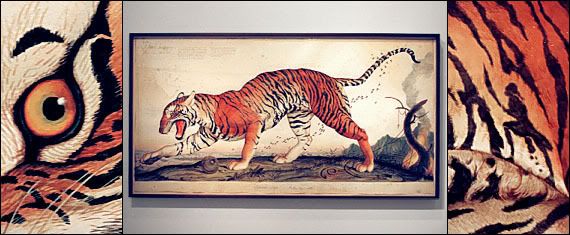
I highly recommend this exhibit, especially if you're interested in drawing some pretty abstract comparisons from his work. He says:
There's this guy, Anthony Alexander Kingslake, who wrote a book called "Eothen" which is about his travels in Egypt. And he talks about crossing into the Ottoman empire and suddenly becoming compromised—which meant that you were in contact with people that were carrying the plague. And you were in quarantine the minute you entered the Ottoman Empire. And so before you did it, you had to make all your preparations or else you would be stuck in quarantine for fourteen days. If you'd left one thing behind you'd have to wait fourteen days to go back. So it was like this way of leaving Christendom, as he put it, and entering the Ottoman Empire was compromising yourself, compromising your own health. And I felt it was just like John Ashcroft and the rest of those guys—it seemed like what's going on in the U.S. today. There's this idea that either you're for us or against us. Either you're compromised or you're not. Either you're infected or you're not. There's no room for middle ground now. It's like getting the plague—you can't have sympathy. You can't try to understand the other side's point of view at all, otherwise you're compromised. "You will be carefully shot and carelessly buried if you break the rules of quarantine"—that was what Anthony Alexander Kingslake wrote about crossing those lines of contamination back then. And it increasingly feels like that would happen now with the new plague, which is just basically our complete terror and fear of what we don't understand.
I totally recommend heading to Brooklyn and checking this out -- hell, call me if you want some help getting from the fifth floor to the fourth!


 Posts
Posts


No comments:
Post a Comment